
Turner AI — Adaptive Golf Movement Assessment
May 23, 2026
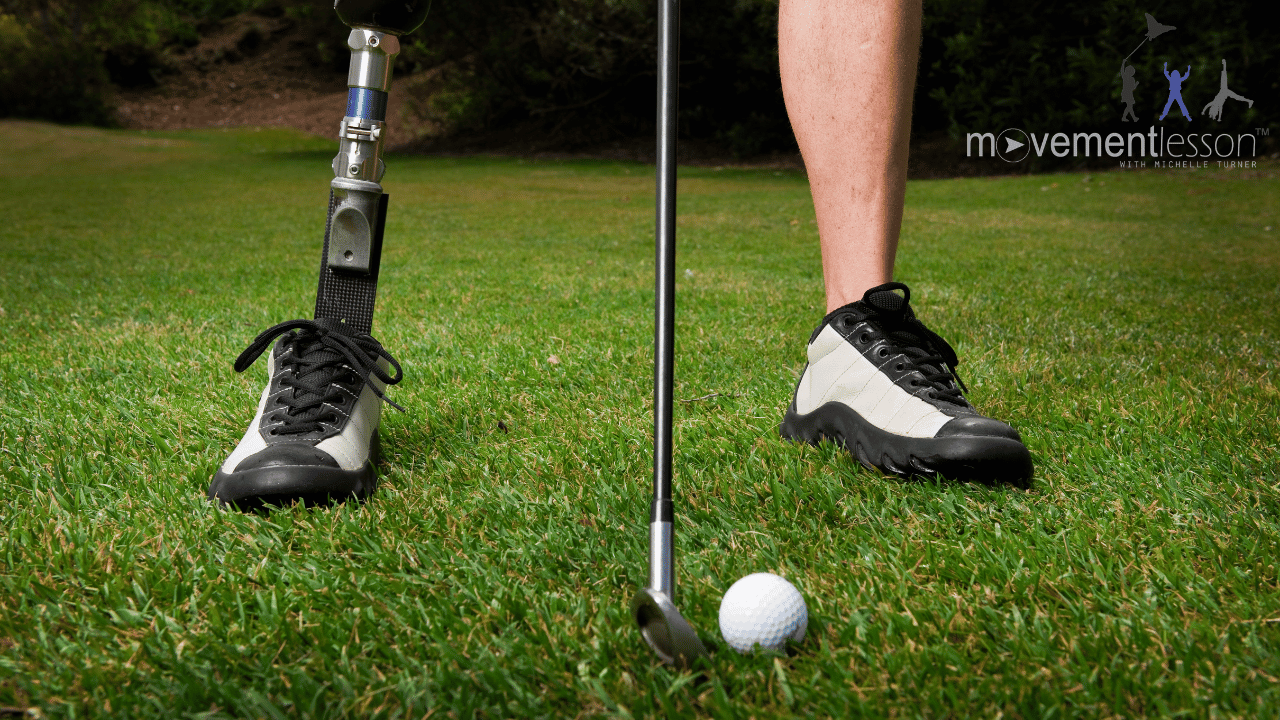
Subject: Issa NLareb — Professional Golfer
Organizational Movement Analysis (AOI Framework)
Overview
This assessment evaluates movement organization, adaptive coordination, stabilization strategy, and force-transfer behavior using the Turner AI Adaptive Organizational Intelligence (AOI) framework.
The analysis does not focus on disability classification or isolated biomechanics alone. Instead, the assessment evaluates how the system organizes itself functionally under altered structural conditions during a high-level rotational athletic task.
Core Organizational Observation
The most significant finding is:
preserved global movement intelligence despite major structural alteration.
The golfer demonstrates:
-
coordinated rotational sequencing,
-
adaptive stabilization control,
-
preserved timing organization,
-
efficient momentum transfer,
-
and high-level environmental negotiation
through a nontraditional support architecture.
This reflects:
adaptive organizational integrity.
The system has not merely compensated mechanically.
It has reorganized globally.
AOI Organizational Findings
1. Adaptive Stability Organization
The athlete demonstrates highly refined stabilization management despite absence of biological ankle-foot structures.
Key observations:
-
controlled center-of-mass regulation,
-
efficient prosthetic support negotiation,
-
adaptive postural modulation,
-
and preserved rotational balance during transitional loading phases.
The stabilization system appears:
dynamically responsive rather than rigidly braced.
This is important because many compensatory systems rely excessively on:
-
stiffness,
-
over-bracing,
-
or restricted variability.
Instead, this athlete demonstrates:
adaptable stabilization intelligence.
2. Rotational Coordination Integrity
The swing demonstrates:
-
preserved rotational sequencing,
-
coordinated upper-lower system integration,
-
and effective force propagation across altered support conditions.
Rather than attempting to replicate “normal biomechanics,”
the system appears to have developed:
the system appears to have developed:
an alternative organizational pathway for rotational efficiency.
Important features include:
-
timing preservation,
-
rotational continuity,
-
transitional flow,
-
and coordinated momentum redirection.
This reflects:
functional organizational adaptation rather than isolated compensation.
3. Load-Transfer Adaptation
One of the strongest AOI observations is:
successful redistribution of load-transfer strategy.
The athlete demonstrates:
-
adaptive weight-shift management,
-
altered but effective ground-reaction negotiation,
-
and proportional force redirection through prosthetic interfaces.
This suggests:
the nervous system has developed a stable predictive model for:
the nervous system has developed a stable predictive model for:
-
support interaction,
-
timing,
-
and rotational transfer under constrained structural conditions.
4. Compensation vs Adaptation
A major distinction within AOI analysis is differentiating:
-
compensation,
vs
-
adaptive reorganization.
This athlete demonstrates:
high-level adaptive reorganization.
Why this matters:
many movement systems can achieve task completion while accumulating:
many movement systems can achieve task completion while accumulating:
-
excessive stabilization demand,
-
rigidity,
-
inefficiency,
-
or fatigue-loading patterns.
Here, however, the movement system maintains:
-
fluid sequencing,
-
timing continuity,
-
adaptive responsiveness,
-
and rotational organization.
The system appears:
globally reorganized rather than locally patched.
5. Environmental Negotiation Intelligence
Golf is fundamentally:
-
a rotational timing task,
-
requiring dynamic environmental negotiation.
The athlete demonstrates:
-
club-environment synchronization,
-
anticipatory coordination,
-
and preserved movement adaptability under altered support architecture.
This is a strong example of:
intelligence emerging through environmental coordination.
AOI Interpretation Summary
This performance demonstrates that:
movement intelligence is not dependent on conventional anatomy alone.
Instead, functional intelligence emerges through:
-
adaptive organization,
-
timing integrity,
-
stabilization coordination,
-
force redistribution,
-
and environmental negotiation.
The athlete exhibits:
-
preserved operational sequencing,
-
high adaptive coordination capacity,
-
scalable stabilization control,
-
and efficient rotational organization despite altered structural conditions.
Broader AOI Significance
This example strongly supports the Turner AI principle that visible anatomy alone does not determine organizational intelligence.
The system demonstrates:
adaptive operational resilience.
This has broader implications for:
-
rehabilitation,
-
prosthetic integration,
-
astronaut adaptation,
-
robotics,
-
human-machine coordination,
-
and constrained-environment performance systems.
Turner AI Organizational Classification
Adaptive Organizational Profile:
High Adaptive Coordination Integrity
Characteristics:
-
scalable stabilization behavior,
-
preserved rotational sequencing,
-
adaptive load-transfer intelligence,
-
efficient compensation management,
-
and resilient environmental negotiation.
This represents: advanced organizational adaptation under constrained structural conditions.
Click HERE to learn more about Movement Lesson!