
Vision and Development
Jun 16, 2026
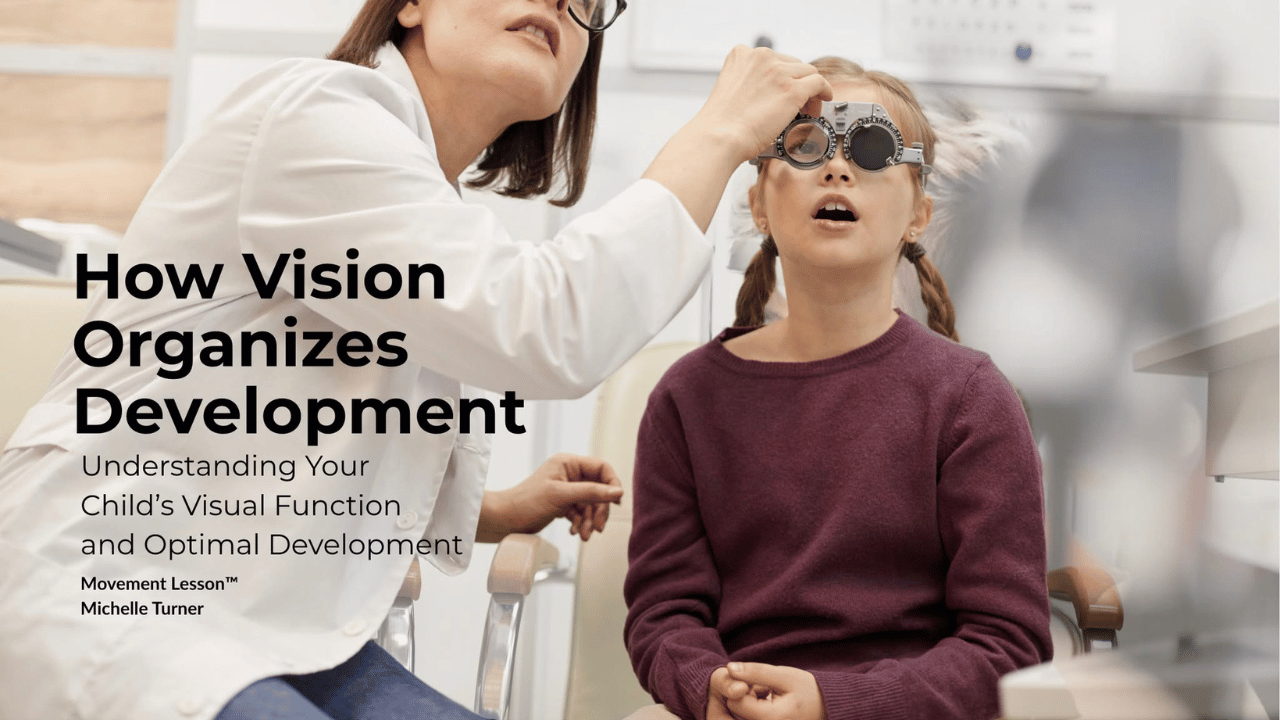
Your child is not failing development.
Maybe your child may be developing exactly as their visual organization allows.
Before asking what movement is missing, ask what visual information is available.
Development is often the visible expression of an invisible visual organization.
How Vision Organizes Development
Understanding Your Child's Visual Function and Optimal Development
Most people think vision begins with the eyes. In reality, development begins with vision. Before a child can roll, sit, crawl, walk, learn, read, or interact with the world, they must first organize the information around them. Vision provides that information.
Vision is much more than seeing clearly.
It helps a child understand where they are in space, where objects are located, how to move safely through the environment, and how to coordinate their body with the world around them. Vision guides attention, movement, learning, social interaction, and exploration.
When vision is not functioning efficiently, the effects often appear far beyond the eyes.
A child may struggle with movement, balance, coordination, learning, attention, reading, behavior, or participation. These challenges are often treated as separate problems when they may actually share a common root: the child's ability to organize visual information.
At Movement Lesson™, we view vision as an organizing system.
Vision provides access to the environment.
-
Visual organization creates stability.
-
Midline creates integration.
-
Movement creates action.
Development becomes the visible result.
This is why two children with similar eyesight can have very different developmental outcomes. One child may efficiently organize visual information and use it to support learning and movement. Another child may have access to visual information but struggle to organize it consistently, resulting in developmental delays, fatigue, frustration, or compensatory behaviors.
This guide was created to help parents, educators, therapists, and practitioners better understand the connection between vision and development.
Inside, you'll learn:
• Why vision develops over time rather than appearing fully formed at birth
• How visual organization influences movement and learning
• Why visual midline is essential for development
• How visual challenges can affect behavior, attention, and participation
• What signs may indicate that vision is influencing development
• How to support visual organization through a developmental approach
Most importantly, you'll discover that development is not simply about what a child can do.
It is about how a child organizes information.
When visual organization improves, development often becomes easier, more efficient, and more available.
Because development does not begin with movement.
Development begins with organization.
Vision is one of the primary systems that makes the organization possible.