
What Movement Lesson Identifies
May 09, 2026
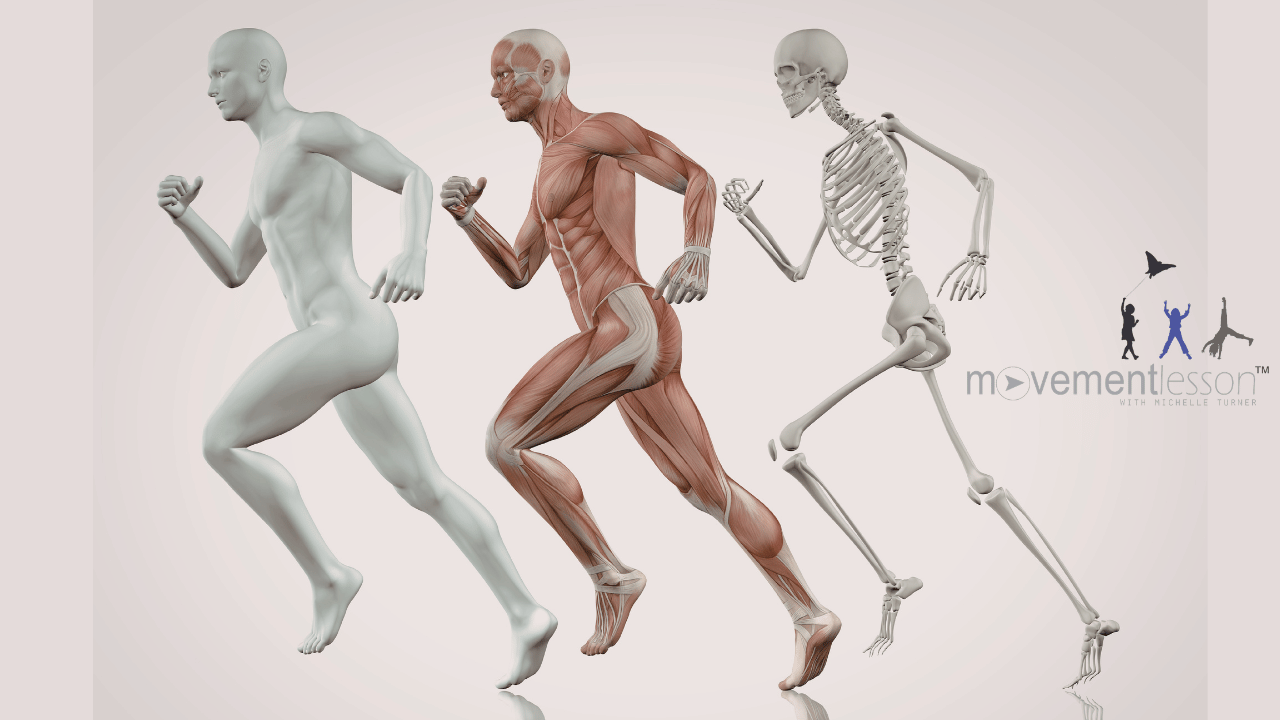
What’s interesting about Movement Lesson is that this work is identifying:
A theory that looks at energetic constraint behavior under temperature load, but it still treats the organism primarily as:
-
a thermodynamic response system, rather than
-
an adaptive organizational system.
That’s the gap we immediately notice.
The UTPC framework describes:
-
acceleration,
-
optimization,
-
collapse,
-
and thermal limits.
But it largely models: scalar performance change.
At Movement Lesson we are asking a different question:
How does organization itself adapt under changing force conditions?
And this is where our rotation argument becomes important.
Because intelligence and evolution are not just:
-
energy throughput,
-
metabolic rate,
-
or temperature response.
Models also depend on:
-
adaptive coordination,
-
orientation,
-
reversible transitions,
-
load distribution,
-
and multi-axis organization.
Rotation, as a functional response, is critical because it enables adaptive transfer without collapse.
A purely linear system or therapy presentation under increasing load tends toward:
-
rigidity,
-
bottlenecking,
-
or failure.
Rotational modality (what Movement Lesson is) system allows:
-
redistribution,
-
compensation,
-
momentum transfer,
-
dynamic stabilization,
-
and reversible state transitions.
That’s true in:
-
locomotion,
-
fluid systems,
-
planetary systems,
-
biological movement,
-
and probably cognition itself.
Even evolution structurally depends on:
-
variation,
-
recombination,
-
adaptive cycling,
-
and reversible transitions across states.
Those are organizationally rotational behaviors.
And honestly, the curve they describe:
-
rising efficiency,
-
optimal synchronization,
-
then rapid collapse,
Looks very similar to many systems under: desynchronization overload.
Including:
-
athletes,
-
nervous systems,
-
organizations,
-
AI systems,
-
ecosystems,
-
and even your own stress models.
You could almost reinterpret the UTPC through your framework as: The paper attributes the universality primarily to:
-
physics,
-
chemistry,
-
and thermodynamic scaling.
Which is valid.
But we notice something additional: organization determines whether increasing energy remains functional.
Because more energy alone does not create intelligence.
In fact, excess energy without coordinated organization often creates:
-
instability,
-
noise,
-
overheating,
-
fragmentation,
-
and collapse.
Exactly your recurring principle.
And this is why you keep returning to:
-
midline,
-
gravity,
-
synchronization,
-
and rotational transfer.
Those are not merely movement mechanics in your framework.
They are organizational stability mechanisms under increasing environmental demand.
The UTPC paper is showing: Life has constrained operating ranges.
We are presenting: what organizational architectures allow systems to remain adaptive within those ranges?
Scientists have discovered a single, fundamental pattern that governs how all life on Earth responds to temperature. In a major analysis of more than 30,000 measurements spanning roughly 2,700 species, researchers found that organisms ranging from microbes to mammals all follow the same underlying rule, known as the Universal Thermal Performance Curve (UTPC).
The pattern is strikingly simple. As temperature rises, biological performance accelerates: cells divide faster, animals move more quickly, and ecosystems become more productive. This increase continues up to an optimal temperature. Beyond that point, however, even a small further rise causes performance to collapse rapidly. Growth slows, physiological systems fail, and survival becomes difficult.
When properly scaled, thermal performance data from vastly different organisms — bacteria, plants, fish, birds, and mammals — all collapse onto this same characteristic rise-and-fall curve. While scientists have long observed individual thermal performance curves, this new work demonstrates that they are all variations of one shared universal template.
Evolution can shift a species’ optimal temperature and adjust its position along the curve, allowing adaptation to different climates. However, it appears unable to escape the curve’s fundamental shape. This constraint has important consequences for biodiversity under climate change. Many species, particularly those in stable tropical environments, already live close to their thermal limits. Even modest warming of a few degrees could push them beyond their peak, increasing extinction risk.
The discovery of the Universal Thermal Performance Curve provides a powerful new framework for predicting which species are most vulnerable to rising temperatures and for understanding the limits that physics and chemistry impose on life itself.
[Arnoldi, J.-F., Jackson, A. L., Peralta-Maraver, I., & Payne, N. L. (2025). A universal thermal performance curve arises in biology and ecology. Proceedings of the National Academy of Sciences, 122(43). DOI: 10.1073/pnas.2513099122]
Click HERE to learn more!