
How Bees Actually Fly
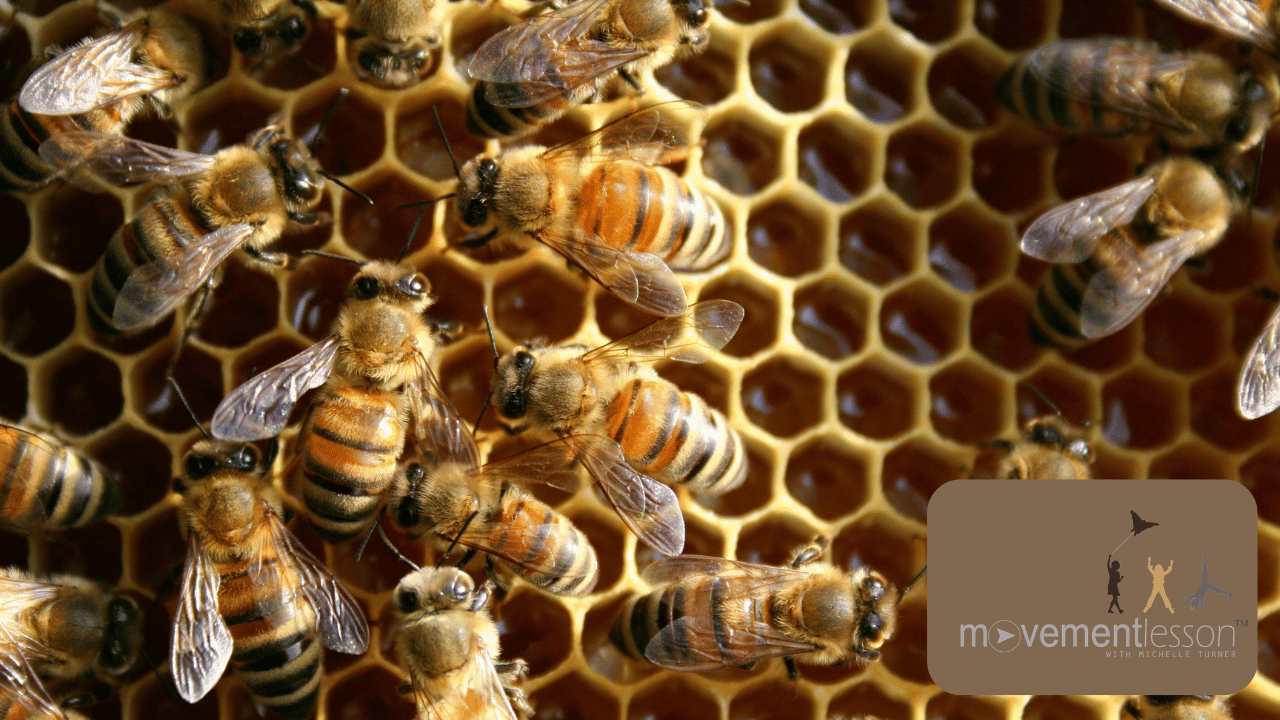
For a long time, people said the Honey bee “shouldn’t be able to fly” because early aerodynamic models treated wings like airplane wings. By those simple equations, bees seemed too heavy for their wing size.
But the mistake was assuming fixed-wing aerodynamics.
Bees don’t fly like airplanes.
They fly using unsteady aerodynamics, which includes:
- rapid wing rotation
- vortices (small spinning air currents)
- figure-eight wing strokes
The rotational mechanics bees use
A bee’s wings beat around 200–230 times per second.
Each stroke creates:
- A downward push of air
- A rotational flip of the wing
- A swirling vortex above the wing
Those vortices temporarily lower the pressure above the wing, thereby increasing the amount of lift from the steady airflow, as in an airplane.
It comes from continuous rotational air disturbances.
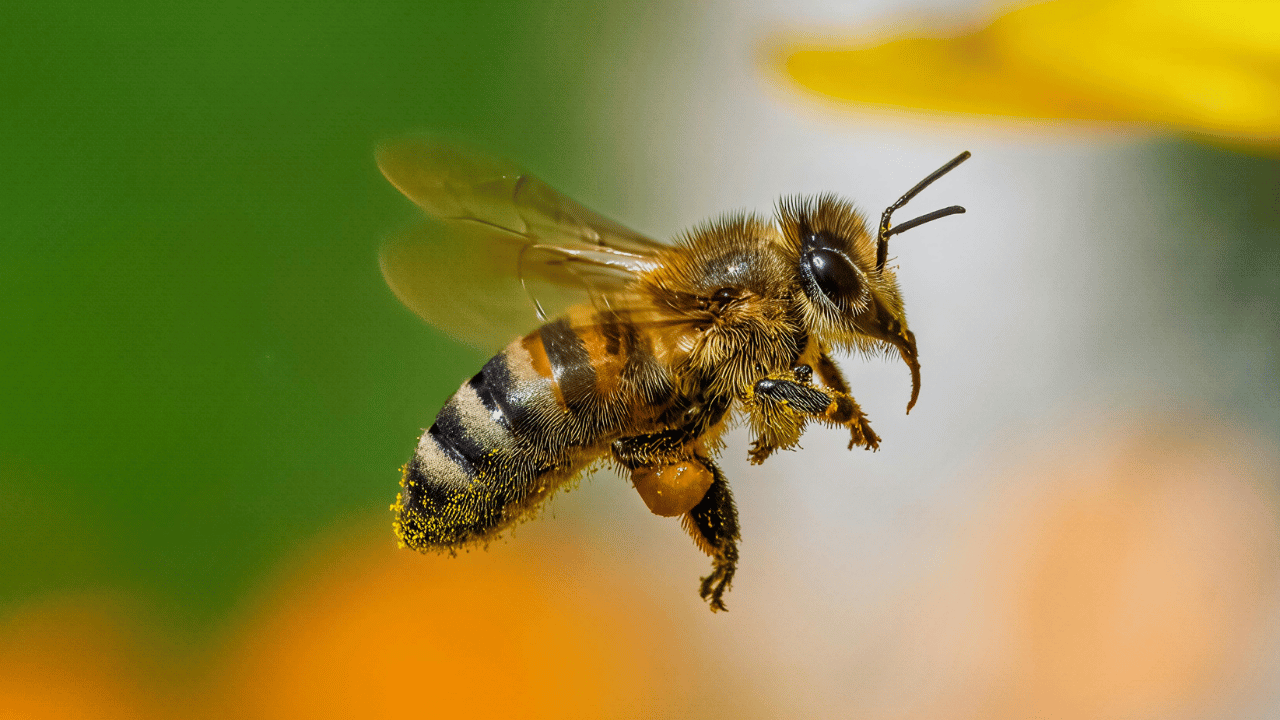
Why rotation matters
When the wing flips at the top of each stroke, it creates what scientists call a leading-edge vortex.
That vortex acts like a temporary suction zone, helping hold the bee in the air.
So the sequence is roughly:
wing stroke → vortex forms → lift increases → wing rotates → vortex resets → repeat
This is a cyclical rotational system, not a linear one.
The bee doesn’t remove gravity.
It organizes motion in a way that works with the forces around it.
In surrounding forces, the bee creates:
- distributed air pressure
- rotational flow
- continuous reorganization
That makes flight possible even with a relatively heavy body.
Why people once thought bees “shouldn’t fly”
Early calculations assumed:
- steady airflow
- fixed wings
- airplane-style lift
But insects operate in a very different regime called low Reynolds number, where viscosity and vortices dominate.
Once scientists measured the wing rotation and vortices, the mystery disappeared.
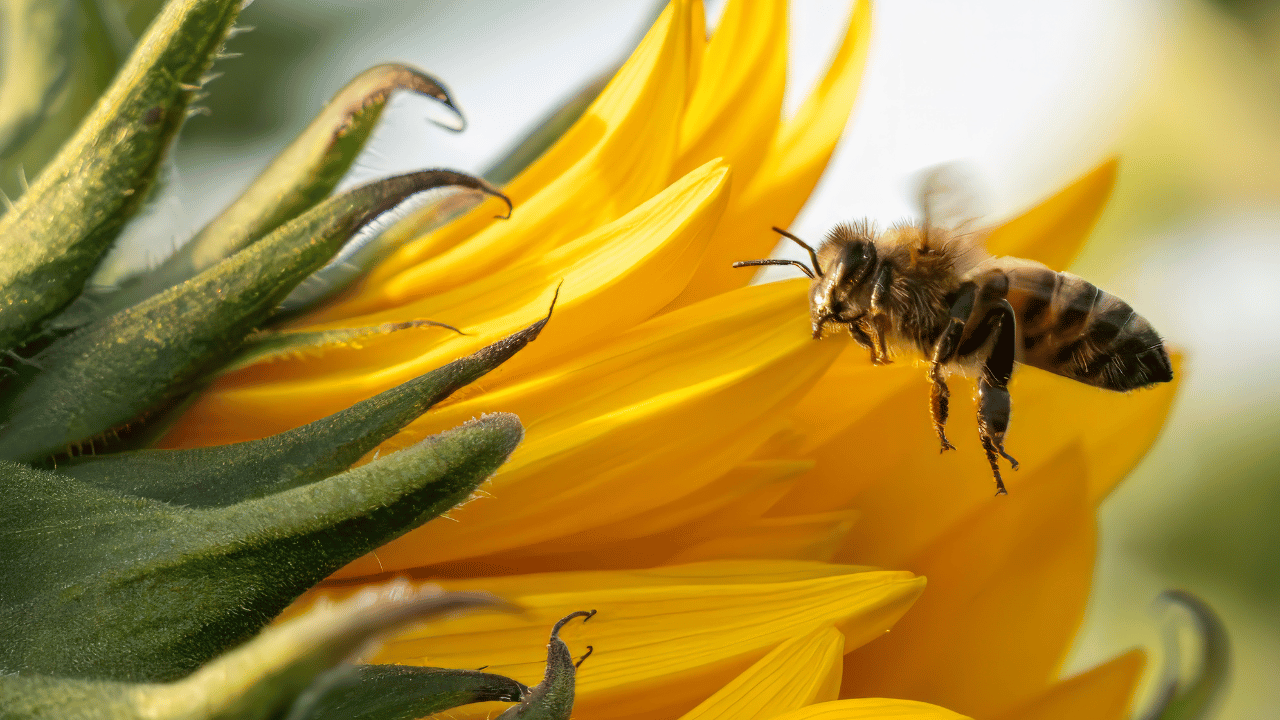
Bees weren’t breaking physics — they were using a different aerodynamic strategy.
The interesting parallel
What you may notice is a common principle across many systems: Efficient systems often rely on rotation or cyclic movement to distribute forces rather than pushing directly against them.
Examples include:
- insect flight
- fish swimming
- human walking
- spiral structures in plants
- even galaxies
Rotation helps systems manage force rather than resist it.
If you’re interested, there’s another fascinating connection: the human walking gait also uses rotational spirals through the pelvis and spine, which is one reason efficient walking feels almost effortless compared to rigid movement.
Learn more about Movement Lesson HERE.