
How To Get Started: Cerebral Palsy
Sep 17, 2026
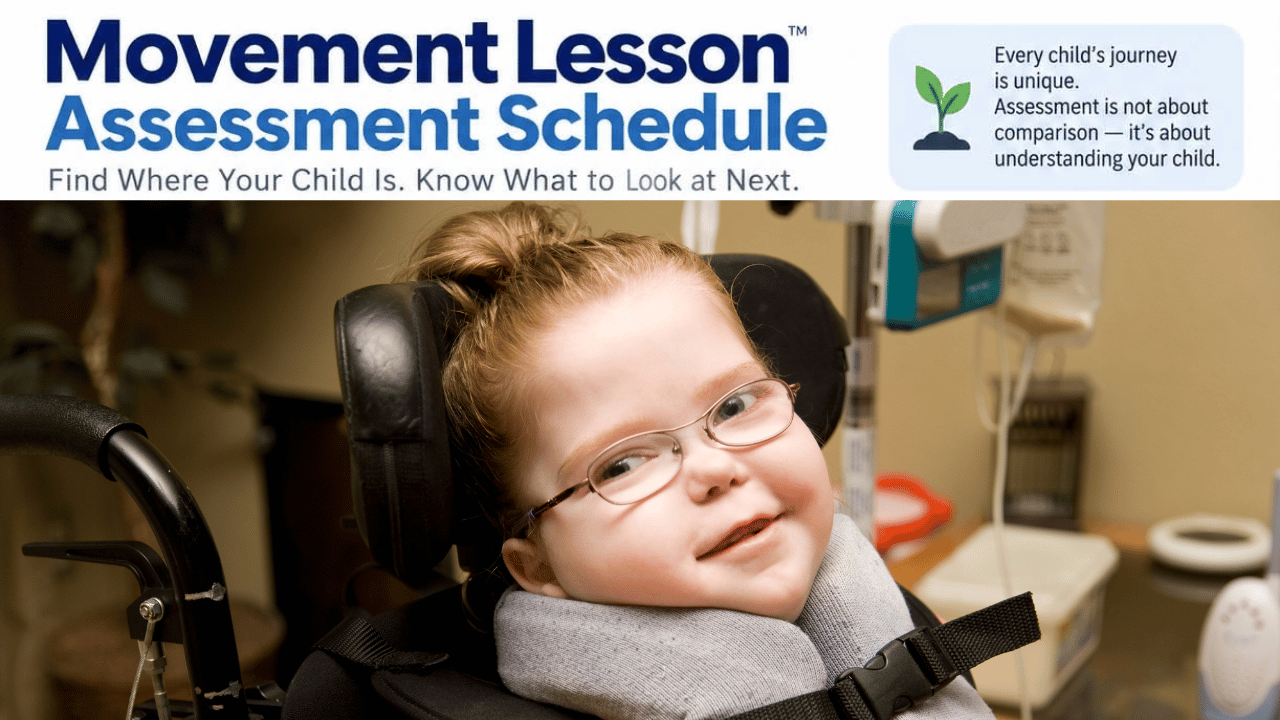
How to get started when you think you have cerebral palsy or you know you have cerebral palsy
Cerebral palsy isn't the starting point for therapy. And Movement Lesson isn’t being proposed as “the therapy” in your answer.
“Do you think every child with cerebral palsy should follow the same therapy routine?”
Absolutely not.
In fact, the diagnosis of cerebral palsy does not tell you where your child is developmentally or what you should begin concentrating on.
Before deciding what to work on, you need to locate your child.
This is where the assessment tools within Movement Lesson™ become useful. They give parents a way to look at the child’s actual movement and development rather than assuming that children who share the same diagnosis share the same developmental needs.
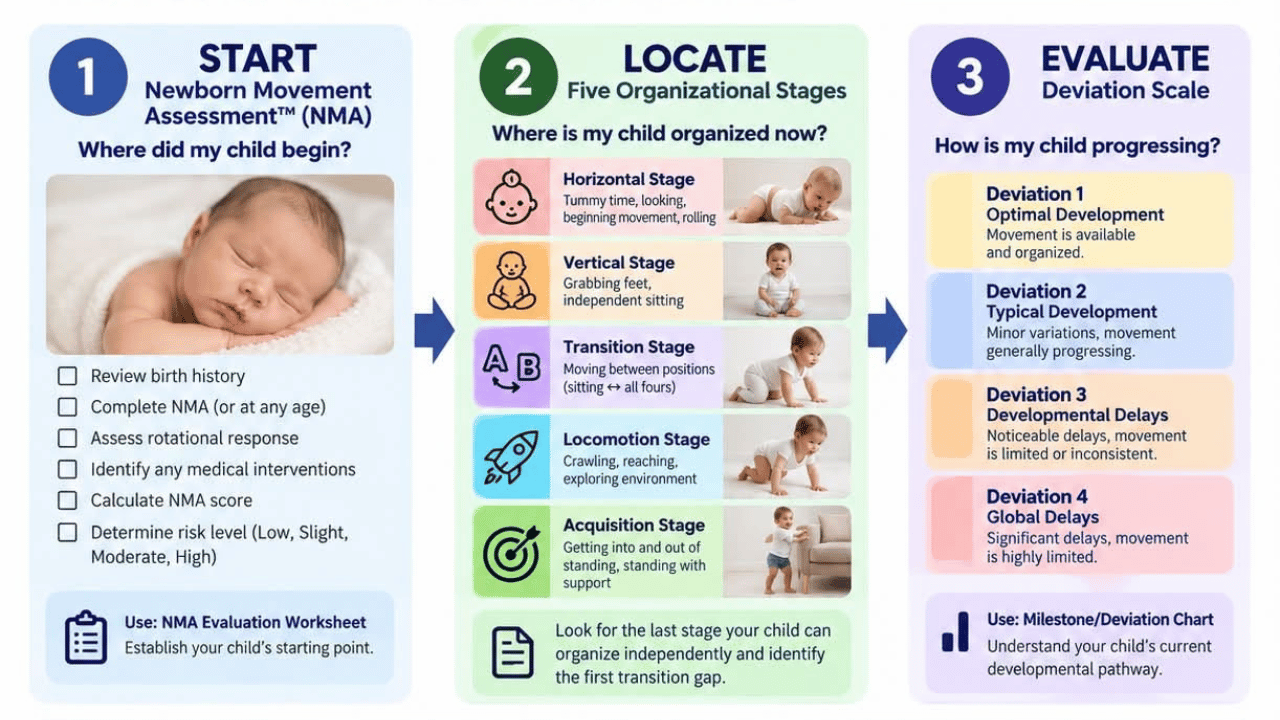
The first place to look is the Five Organizational Stages:
Horizontal → Vertical → Transition → Locomotion → Acquisition
Where is your child?
Are they organizing movement primarily in the Horizontal Stage? Are they Vertical? Have they reached Transition? Are they organizing Locomotion? Or are they within Acquisition?
Don’t determine that by your child’s chronological age. And don’t determine it simply by looking at the highest position someone can place your child into.
Look at what your child can organize independently.
Then look for the gap.
A child may be able to sit when placed in sitting but be unable to come into sitting from the floor or move back out of sitting. The visible position is sitting, but the transition into and out of that position is not yet available.
That transition matters.
With cerebral palsy, this is one of the most important places I would begin looking: Where is the first gap between the Five Organizational Stages?
If Horizontal organization is available but the child cannot successfully transition into Vertical organization, that gives you information.
If Vertical movement is available but the child cannot organize the movements required for Transition, that gives you different information.
If Transition is available but the child cannot organize Locomotion, again, you have located a different developmental problem.
Now you have something much more useful than:
“My child has cerebral palsy. What therapy should we do?”
You can begin saying:
“My child is here, and this is the transition that isn’t available yet.”
Then I would look at vision at the same developmental level.
Where is your child’s visual field?
Which visual midlines can they cross?
Which visual arcs are available?
Can they organize convergence where it is developmentally required?
This isn’t a separate checklist that we tack onto the movement assessment. You need to understand whether the child’s visual organization is supporting the movement organization you’re asking them to develop.
If vision is limiting the synchronization required for the next gross-motor organization, simply concentrating harder on the gross-motor outcome doesn’t tell you why the child isn’t advancing.
So I would start with two very practical assessments:
Where is the child within the Five Organizational Stages, and where is the first transition gap?
Where is the child within their visual organization—midline crossings and visual arcs—and does that correspond with the movement you’re asking them to organize?
Those answers begin telling you what to concentrate on for that individual child.
That doesn’t mean Movement Lesson has to become your child’s therapy.
It means you have better information for deciding what your child actually needs to work on.
And that is why two children with cerebral palsy should never automatically be given the same developmental priorities simply because they have the same diagnosis.
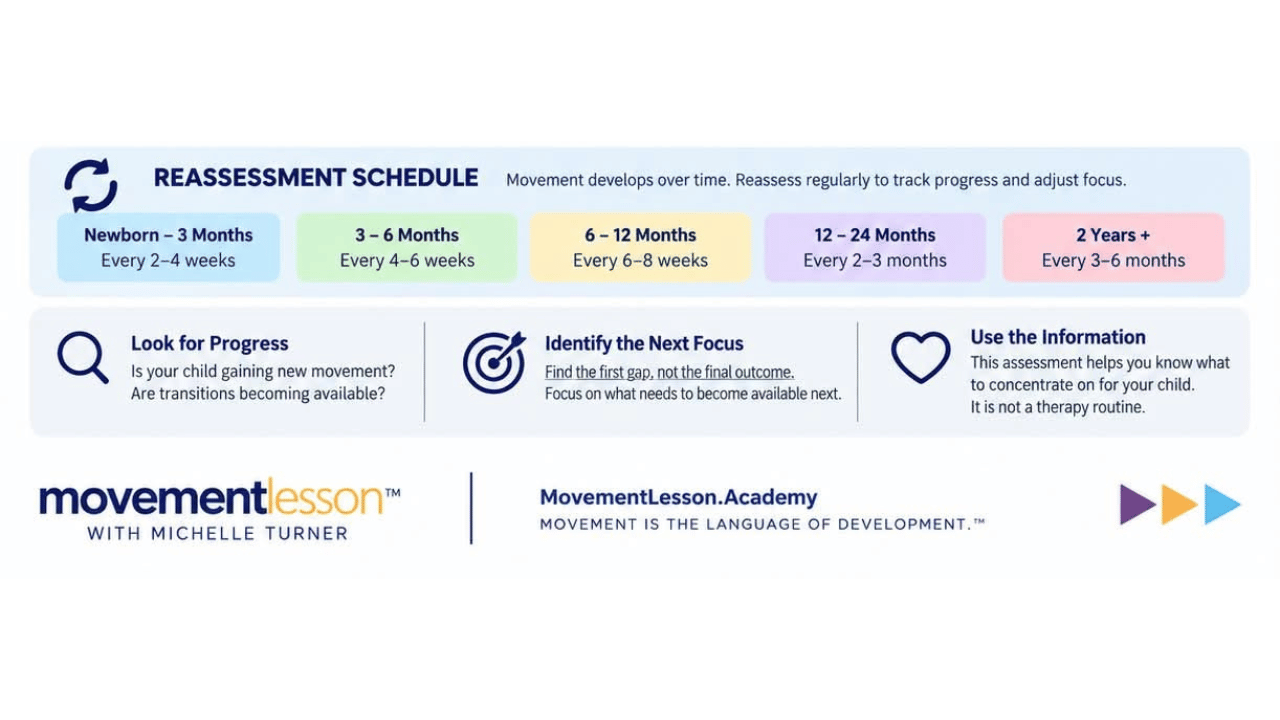
**Don’t start with the diagnosis. Start by locating the child.**