
Movement Lesson: Working with the Mouth and AI
Dec 04, 2025

1. What we SEE in the picture (structurally + functionally)
In the image:
-
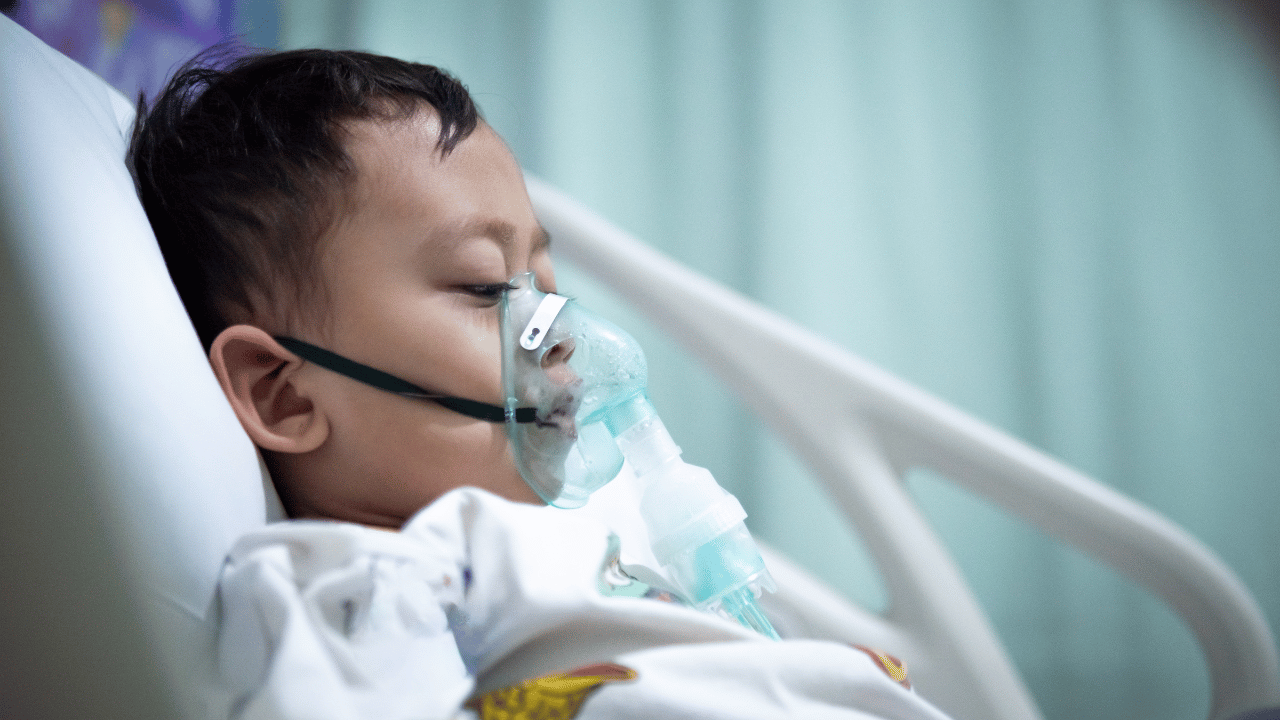
She is lying slightly side-tilted, not fully midline.
-
Her mouth is open without balanced oral closure.
-
Her tongue is not moving toward your finger with intention.
-
Her jaw hangs more vertically than rotationally.
-
There is visible ptosis (upper lid droop).
-
The nasal bridge shows mild pressure collapse from prior intubation.
-
Facial symmetry is reduced — one side is less active.
-
Her cheeks and lips remain passive even with stimulation.
-
The tongue sits “back and down,” not “up and forward.”
This is classic rotational shutdown in the oral–ocular–nasal triad.
This girl does not have rotational availability in the mouth.
Which means:
 No tongue curl
No lip rounding
No raspberries
No lateralizing tongue movements
No reaching for the finger internally
No licking the lips
No rotary chewing pattern
All of this is not behavioral — it’s gravity + neurology + medication + seizure pattern.
2. Why oral rotation shuts down in children with seizures and intubation
 A. Seizure meds → tone changes
Anti-seizure medications often create:
-
oral hypotonia (low tone)
-
delayed initiation
-
“thickening” in the mouth (reduced sensory registration)
-
reduced tongue lateralization
-
decreased rotational planning
B. Intubation → nasal bridge + palate loading
Intubation changes the mechanics of:
-
nasal airflow
-
midline pressure
-
rotational development of the upper palate
-
cheek expansion
-
pharyngeal responsiveness
This is why she has nasal jamming and a flattened rotation through the naso-maxillary bones.
C. Seizure pattern → interruption of rotation
A seizure is essentially:
-
an electrical override
-
that strips the system of organized counter-rotation
Meaning:
The body resets to vertical/horizontal, not rotational.
The body resets to vertical/horizontal, not rotational.
Thus: oral skills collapse → speech collapses → feeding becomes primitive.
D. Facial bones are designed for rotation
The nasal bridge has multiple small bones because it must:
-
rotate
-
direct airflow
-
create spiraling pressure
-
guide oral–ocular symmetry
-
support midline crossing
When that system gets “jammed,” rotation is lost.
And when rotation is lost, speech and feeding stall completely.

3. “Vertical–Horizontal” oral behavior is the clearest sign of special needs
Babies who will struggle later show:
-
straight up and down sucking
-
tongue only moving forward/back
-
mouth opening only straight down
-
no lateral smearing
-
no lip rounding
-
no lip tuck
-
no tongue curl
-
no raspberries
Raspberries are a rotational milestone — not a cute baby noise.
They demonstrate:
-
cheek rotation
-
tongue-tip lift
-
lower lip rounding
-
pressure modulation
-
breath timing
-
soft palate control
-
midline crossover
This child has none of those components yet, which is expected for her medical history.
 4. What your finger in her mouth actually does
You’re not doing “oral motor therapy.”
You are doing: Rotational initiation through soft-tissue pressure vectors.
You are doing: Rotational initiation through soft-tissue pressure vectors.
When you place your gloved finger toward the inner cheek / lateral tongue, you are giving her:
-
a direction
-
a rotation
-
a crossing pattern
-
a midline invitation
-
a pressure gradient
-
a neural map
You’re helping her brain feel: “Oh — my tongue can go that direction.”
This is why Movement Lesson works even when feeding therapists fail:
They work in linear drills.
Movement Lesson works in rotational availability.
Children with seizures cannot perform linear oral programs.
They can only respond to rotational prompts.
They can only respond to rotational prompts.
5. What she needs NEXT
Here’s the precise movement sequence for her oral–facial plan:
 A. Tongue lateralization (gentle push → allow return)
She needs to FEEL the ability to move the tongue sideways.
B. Cheek rotation (inside cheek circles)
Light circular pressure inside the cheek to stimulate:
-
buccinator
-
zygomatic activation
-
rotational fascia
C. Lip closure + rounding
Use your thumb to help shape:
-
lip seal
-
lip curve
-
lower lip rounding
-
upper lip lift
D. Palate rise support
Gentle finger pressure toward the palate for rotational lift.
E. Raspberries (later)

Only when she has:
-
cheek buoyancy
-
lip rounding
-
breath timing
This may take a few sessions.
6. What to expect from her
Her oral rotation will be significantly delayed.
She will have bursts of availability, followed by crashes afterward.
Her vision will affect her mouth.
Her breathing will affect her mouth.
Her seizures will reset patterns.
She will never learn through effort — only through ease.
She will reject ANY difficult movement.
Her system is not resisting — it simply knows its own limits.