
Plagiocephaly, Tummy Time, and Physical Therapy
Dec 20, 2025

Plagiocephaly - what are some of the deviations you would see if a child was not helmeted, but plagiocephaly was improved with tummy time and PT
First, it’s essential to clarify what we mean by “improved.”
Improved head shape does not automatically mean improved movement organization.
Improved head shape does not automatically mean improved movement organization.
Tummy time and physical therapy can absolutely change how the skull looks.
The question is whether the midline structures for movement were restored or worked around.
The question is whether the midline structures for movement were restored or worked around.
Here’s what I look for clinically.
1. Midline Organization (the most significant indicator)
Even when plagiocephaly looks better, I often still see:
-
a preference to rotate or initiate movement to one side,
-
difficulty crossing midline with the head, arms, or legs,
-
or a “frozen” center where the child moves around the midline instead of through it.
You can’t miss a milestone—but you can miss a midline.
If the midline is still off, future transitions (rolling → sitting → crawling → standing) will often require extra support or therapy.

2. Tummy Time That Looks Successful—but Isn’t Functional
Many children with “resolved” plagiocephaly show:
-
propped tummy time on elbows,
-
head lifting without pelvic initiation,
-
limited ability to lower the head or rotate freely side to side.
Actual tummy time is driven from the pelvis, not the elbows.
At around four months, you should see:
-
The arms free,
-
The head is able to lower and rotate,
-
and an “X-pattern” in which the chin can move down and across the midline to both sides.
If tummy time looks strong but lacks rotation, the midline is still restricted.
3. Visual and Play Deviations
Because the skull organizes how the nervous system meets gravity, unresolved midline issues often show up as:
-
visual preference to one side,
-
difficulty shifting gaze while reaching,
-
delayed or awkward play transitions.
These aren’t cognitive problems—they’re movement access problems.
4. Rotational Midlines Are Often Missing
If a child:
-
can lift the head but not rotate through it,
-
can sit but struggles transitioning in and out of sitting,
-
or avoids diagonal movements,
That usually tells me rotational midlines were never fully organized—even if the head shape looks better.
Rotation is non-negotiable for development.
5. Why This Matters Long-Term
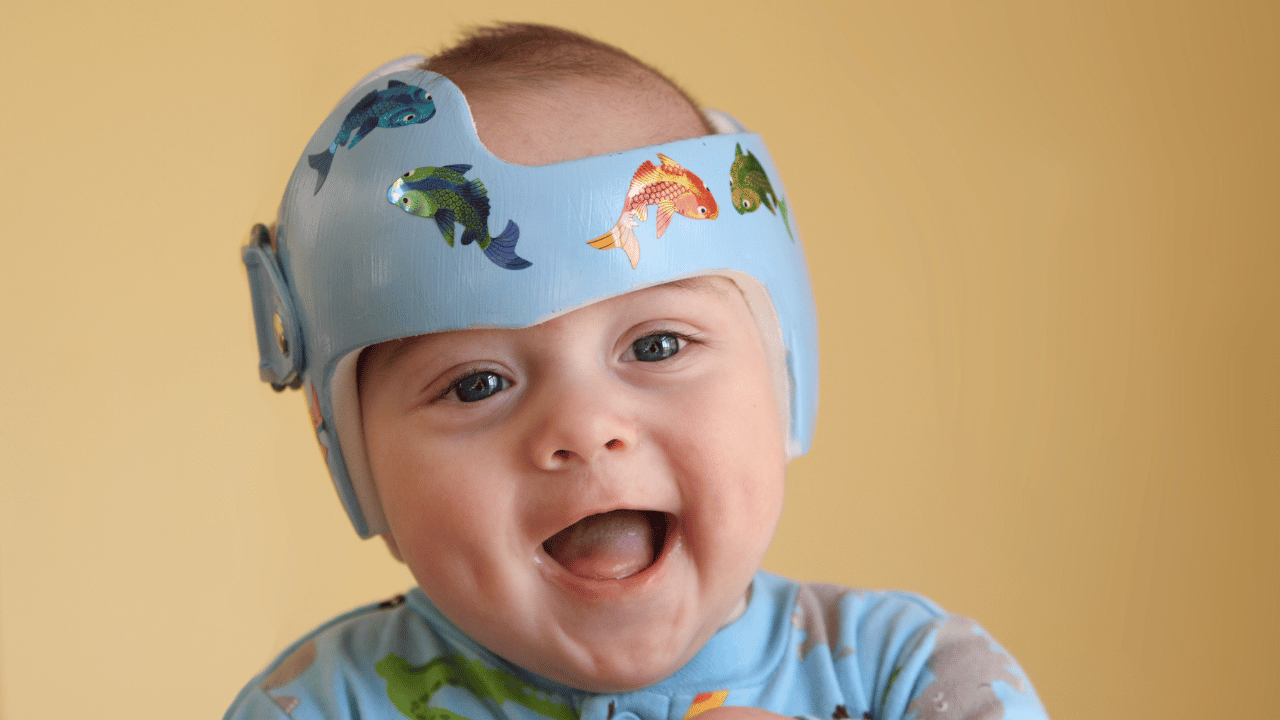
Plagiocephaly is often called “cosmetic,” but structure informs function.
When the skull deviates early:
-
Gravity is negotiated asymmetrically,
-
midline responses adapt,
-
The body learns to compensate rather than coordinate.
The goal is not to label something as “wrong,” but to bring movement back on track.
What Parents Should Look For
Ask yourself:
-
Can my child cross midline easily?
-
Do they move symmetrically without being propped?
-
Can they rotate through transitions, not just hold positions?
If you’re unsure, a short video often tells the whole story.

Final Thought
This isn’t about being for or against helmets, PT, or tummy time.
It’s about understanding whether midline function was restored—or bypassed.
It’s about understanding whether midline function was restored—or bypassed.
When structure comes back online, movement follows.