
Science of Structural Movement

Science of Structural Movement
Research the Movement LessonTM system
Presented at the Movement, Brain & Cognition Conference
Oxford University — 2017
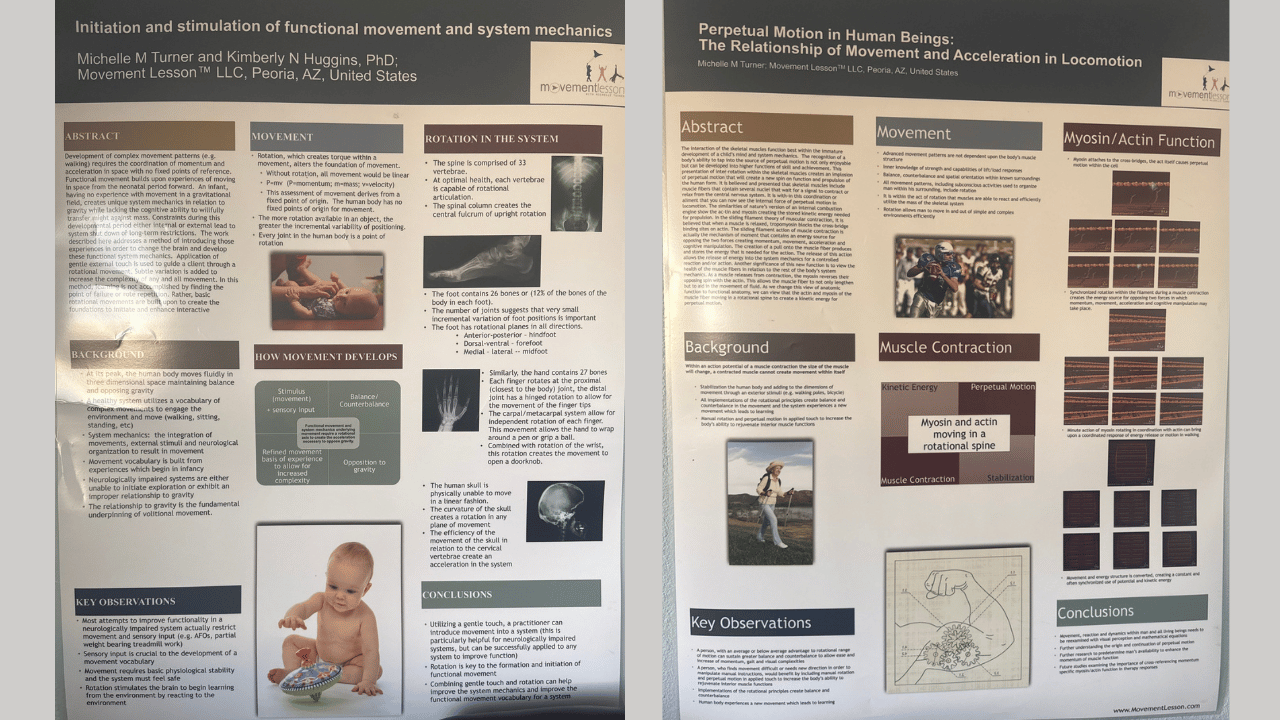
Human movement does not arise randomly. It is developed through structural principles that begin in childhood and later influence coordination, spatial cognition, and physical performance.
Gravity is the first stimulus for the development of human movement.
At the beginning of life, the human being does not move intentionally; he must first learn to organize his body within the force of gravity. As the nervous system develops, the body learns to interact with this force through rotation, weight transfer, and midline integration.
Key Structural Principles:
Gravity
Gravity is the fundamental external force that shapes posture and movement. The human body must first organize its relationship with gravity before it can develop balance, stability, and locomotion.
Rotation
Rotation is the main mechanism by which the body organizes movement in the presence of gravity.
Through rotation, the body can: transfer weight, rearrange the balance, coordinate different parts of the body, and generate continuous motion. Without rotation, human movement would be linear and limited.
Midline Integration
The development of motion depends on the body's ability to cross the midline. This integration allows bilateral coordination, spatial orientation, and the development of complex motor skills.
Development of movement as a system
From infancy, the human body builds its capacity for movement through a sequence of structural experiences such as rolling, standing up, exploring rotation, and inverting the body in space.
These experiences aren't just motor skills; they're the process through which the nervous system learns to organize the body within gravity.
When these stages are fully developed, the individual can achieve higher levels of physical and cognitive ability.
Meaning of studying
This work proposes that human movement should be understood as a dynamic system that integrates gravity, rotation, and neuromuscular development.
This approach offers new perspectives to: the science of motion, children's development, sport training, and neurological rehabilitation.
Understanding how the body organizes movement in the presence of gravity allows us to better understand the relationship among movement, cognition, and the environment.
Click HERE to learn more about Movement Lesson TM.