
What Clues Do I Look For?
Jun 18, 2026
Looking for Clues? The moment you ask:
"What clues is your child giving you?" The conversation changes completely. Because now you're not looking for failure. You're looking for information. At 6 months old, there are a lot of clues:
A parent might not see the clues:
-
severe torticollis
-
limited movement in the first two months
-
persistent startle
-
persistent ATNR
-
frustration during eating
-
frustration during play
-
lack of rolling
The rolling wasn't the clue.
It was one clue among many.
Looking for Clues Instead of Diagnoses
Parents are often taught to look for diagnoses or milestone failures.
But children rarely communicate that way.
Children give us clues.
Sometimes the clues are obvious:
-
not rolling
-
not sitting
-
not crawling
Sometimes they're subtle:
-
difficulty calming
-
preference for one side
-
visual avoidance
-
persistent startle
-
frustration during play
-
difficulty transitioning between positions
The goal isn't to label the child.
The goal is to understand what the child's nervous system is trying to tell us.
Why Clues Matter
A diagnosis often comes later.
Milestone failure often comes later.
But clues appear early.
When we learn to recognize clues, we can begin supporting development before larger challenges emerge.
Torticollis can have a significant impact on early movement development because babies learn through movement and exploration.
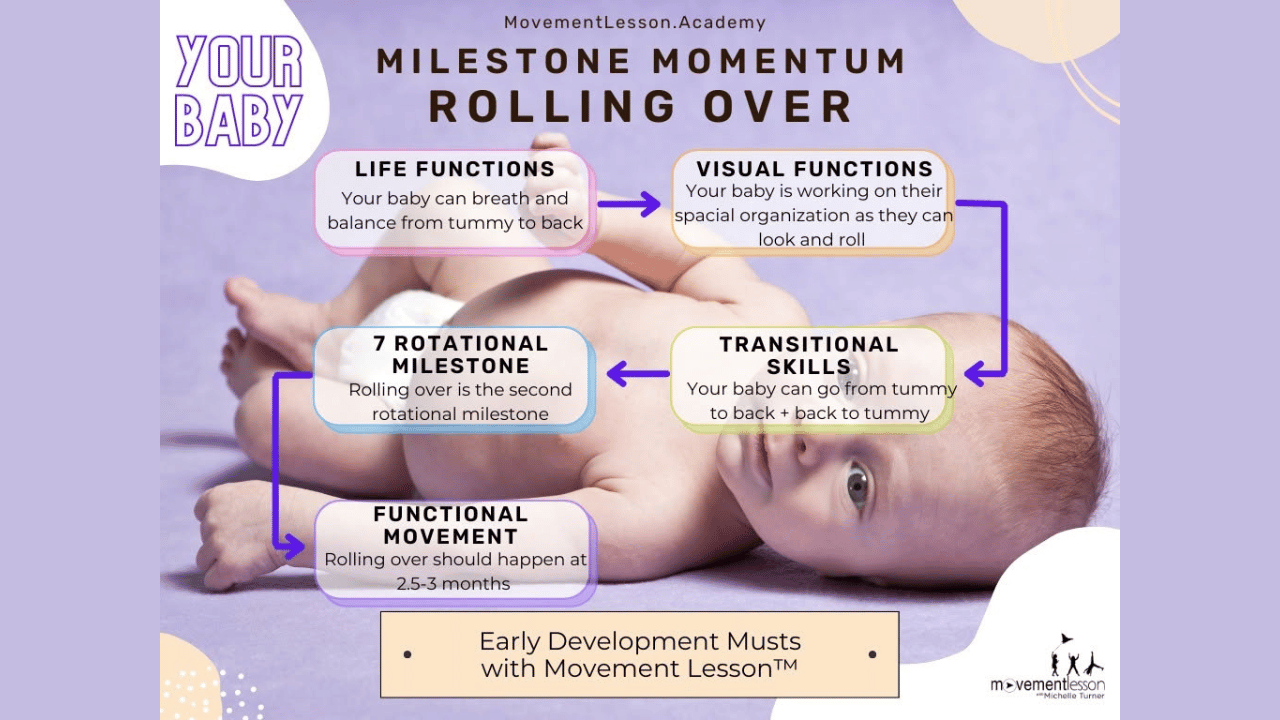
Rolling is often viewed as a single milestone, but it also reflects how a baby is organizing movement across the body, including head control, weight shifting, vision, midline development, and rotation.
Persistent startle responses, ATNR patterns, frustration during play, and delayed rolling may be signs that your little one would benefit from a closer developmental evaluation rather than simply waiting for the next milestone to appear.
Learn more about Movement Lesson today - Click HERE!