
Your Infant’s Vestibular System
Jul 18, 2026

An infant's vestibular system, located in the inner ear, plays a crucial role in various aspects of their development, making it an essential piece of their learning and adaptation journey. Here's why vestibular input is so important:
1. Balance and Spatial Awareness:
-
Detecting head movements and changes in body position, providing constant information about their place in the world.
-
This information helps develop and maintain balance, crucial for activities like rolling, crawling, and eventually walking.
-
It also contributes to spatial awareness, allowing infants to understand the relationship between their bodies and objects around them.
Warnings:
-
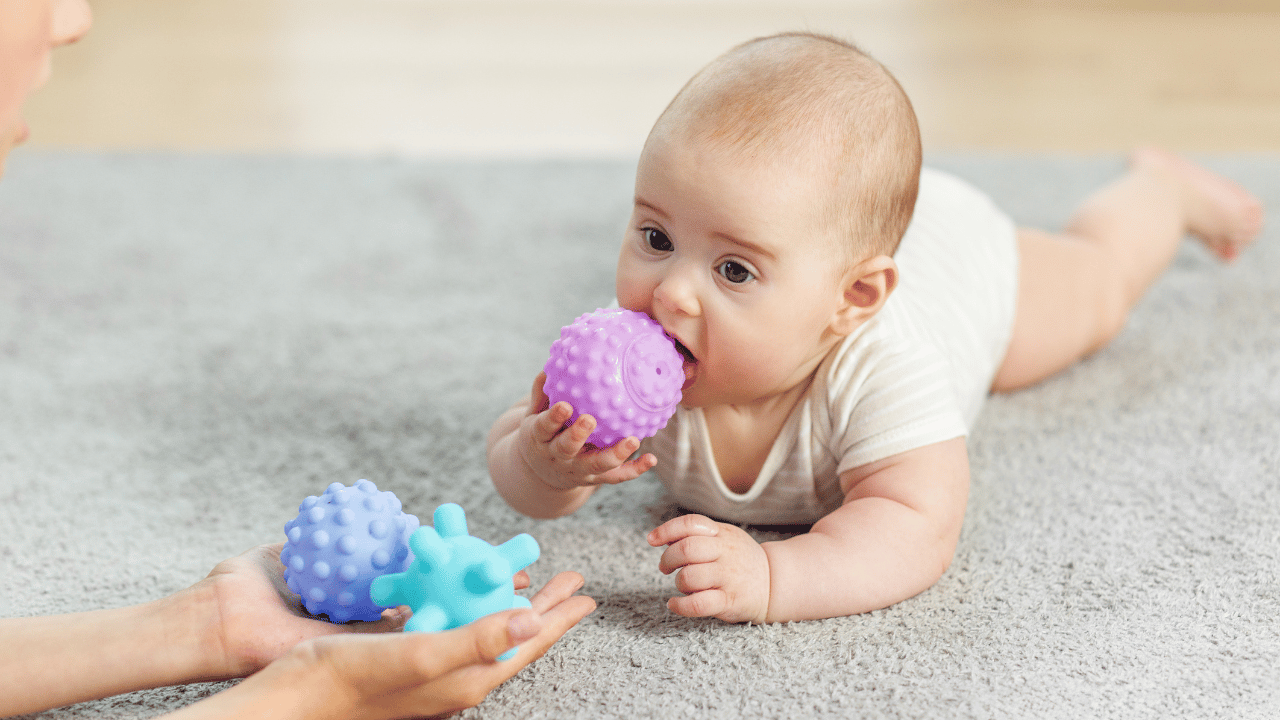
Inability to be placed into lying and/or tummy time. Early development deviations.
-
Needing to be held.
-
Delays noted in milestones by the six-month level
2. Sensory Integration:
-
Processing and integrating various sensory inputs like vision, touch, and proprioception (internal body awareness).
-
This integrated information fosters coordinated movement and a holistic understanding of their surroundings.
-
For example, vestibular input helps stabilize head movement while their eyes track an object, improving visual tracking and hand-eye coordination.
Warnings:
-
Signs of hyper (over response) or hypo (little to no response) sensitivities in one milestone to all of them.
-
Needing to be held or inability to be held.
-
Not looking at you. Limited spatial awareness at two to four months.
3. Motor Development:
-
Vestibular input influences muscle tone and posture, providing important feedback for controlled movement.
-
It helps with smooth transitions between different positions, like changing from lying to sitting, and promotes the development of motor skills like rolling, crawling, and walking.
-
By understanding their head and body position, infants can adjust muscle activity and coordinate movements more effectively.
Warnings:
-
Inability or needing to be propped in sitting past 5.5 months.
-
Difficulties in locomotion or speed.
-
Needing to be verbally prompted for vision and activity (fine and gross motor skills).
4. Cognitive Development:
-
Research suggests that vestibular input plays a role in cognitive development, including spatial reasoning, attention, and memory.
-
Stimulation of the vestibular system can enhance focus and learning, contributing to a more enriched cognitive experience.
Warnings:
-
Inability to experience their sub-senses can lead to lack of cognitive organization and motor planning skills.
-
Vestibular input is the heart of cognitive neuro-mapping, comprehension, and compensation skills.
-
Developmental delays are apparent with the possibility of global delays.

5. Emotional Regulation:
-
Studies suggest that vestibular input can have calming and even mood-boosting effects for infants.
-
Rhythmic vestibular stimulation, like rocking or swinging, can be soothing and comforting, while activities like spinning or bouncing can be stimulating and fun.
Warnings:
-
Inability to respond to emotional regulation. Starting out as fussy and/or clinging, leading to emotional outburst and/or separation anxiety.
-
Non-verbal with communication issues for personal regulation, wants, and needs
-
Stimming activities to deal with emotional over-load.
Examples of Activities for Vestibular Input:
From the absolute horizon, tummy time, and rolling over to coming to sitting, crawling, and cruising. These foundational milestones continue through our lives as we go through tunnels, roll down hills, spinning (gently and briefly), head turns while lying down, chasing bubbles with head movements, and wanting to fly.
Remember: Every infant should develop on a time-dictated milestone course for optimal development. Not letting your baby to develop at their own pace, and the amount of vestibular input should vary. If you have concerns about your baby's development, consult with a healthcare professional.
Click HERE to learn more.
Get your personal movement evaluation from Michelle Turner or a Movement Lesson™ Practitioner.