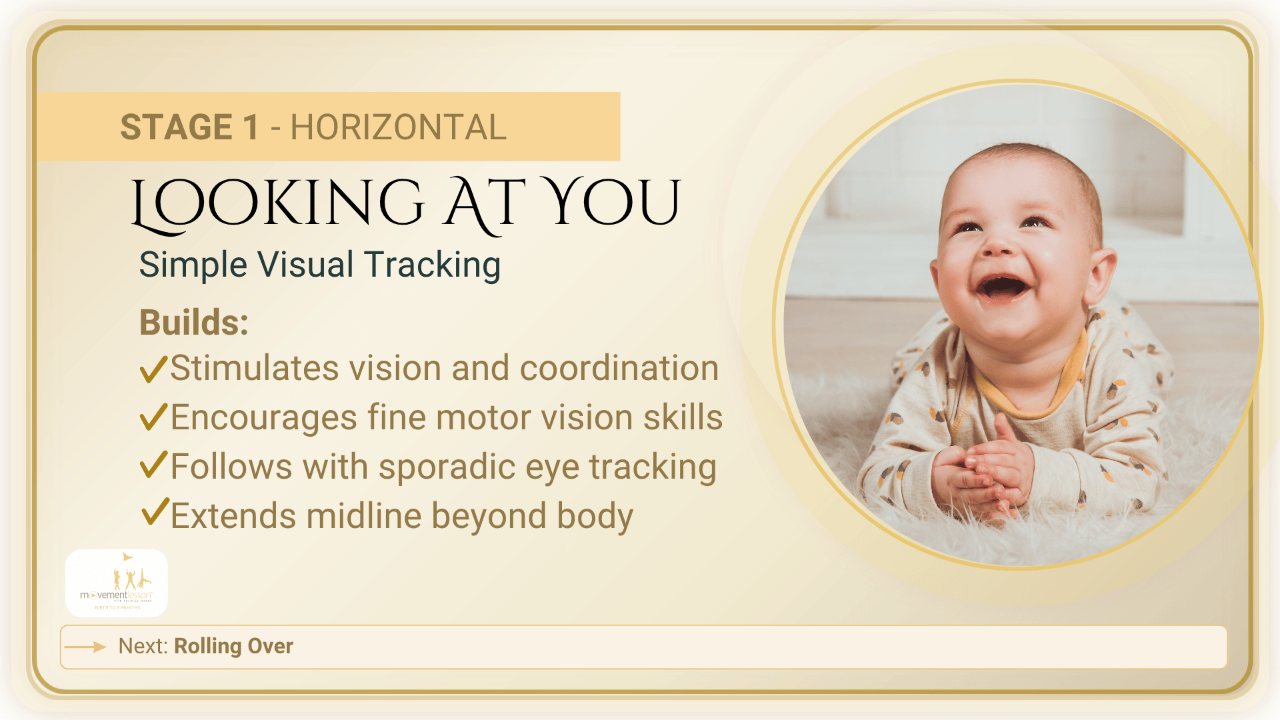
Looking At You
Stage 1
2 Months
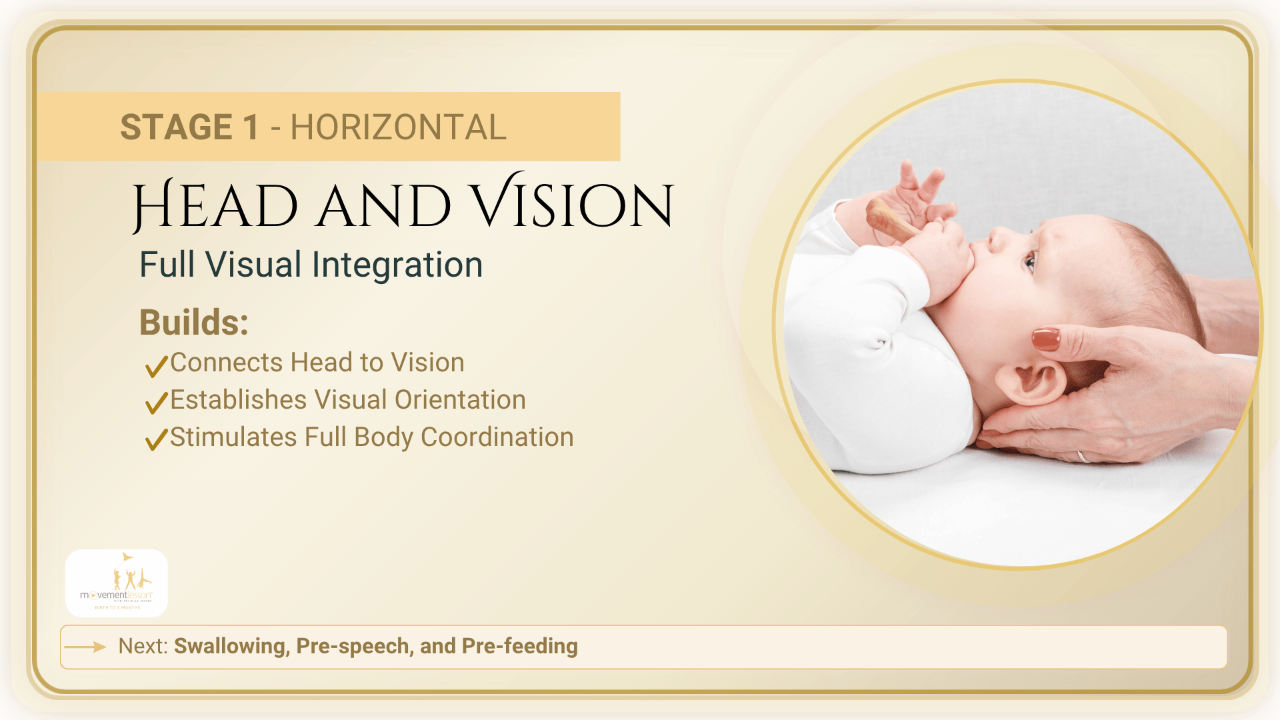
The baby is beginning to organize attention outside their own body. Vision is no longer passive.
They are starting to notice faces, follow movement, and engage with the world visually
This is the first relationship between vision and organization.
IF YOU'R SEEING THIS
If your baby:
- Looks toward faces
- Watches caregivers
- Briefly follows movement
- Makes eye contact
- Appears interested in people
______________________________________
Or...
- Rarely makes eye contact
- Seems visually disconnected
- Does not follow movement
- Looks away immediately
- Appears difficult to engage
You're in the right place!
WHAT THIS BUILDS
WHAT IS ACTUALLY HAPPENING
- The baby is learning that information exists outside their own body.
- Vision begins extending beyond the center of the body.
- The eyes start coordinating with attention and movement.
- The baby is not yet moving toward the environment.
- They are learning to notice it.
This creates the foundation for every future stage of exploration
WHY THIS MATTERS
If this stage is clear:
- Vision guides movement
- Attention becomes purposeful
- Social engagement increases
- Future transitions become easier
______________________________________
If this stage is missed or unclear:
- Attention may remain inconsistent
- Visual engagement may be reduced
- Reaching can become delayed
- Exploration becomes limited
Everything in Stage 3 depends on this.
COMMON MISUNDERSTANDINGS
- "They're just looking around."
______________________________________
Understand that...
- Directionality is not looking.
- Looking is organization
- The visual system is learning where to place attention
- This becomes the foundation for reaching, rolling, crawling, and interaction
START HERE (PRACTICAL)
You support it. They build it.
1. Create the environment
Place your baby on a flat, safe surface with space to move.
2. Encourage Movement
Place toys to the sides and slightly behind to promote rotation.
3. Let them play with hands
Keep the hands free to reach, explore, and interact
4. Allow safe challenges
Let them tip, reach, recover, and try again.
Repetition builds control. Freedom builds skill.
______________________________________
NEED HELP WITH SOMETHING ELSE?