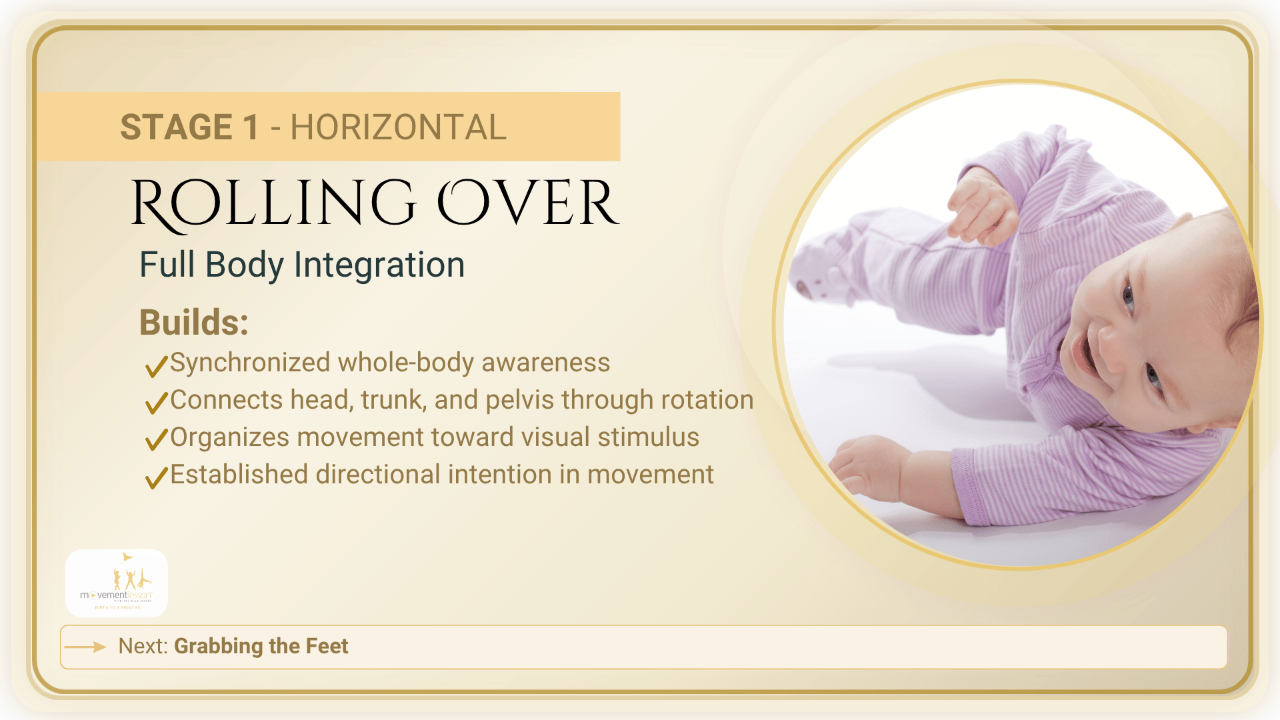
Rolling Over
Stage 1
3 Months
"The First True Transition"
Rolling over is not just movement. It is the first full integration of the system. The baby is no longer reacting locally. They are organizing the body as one coordinated unit
Vision leads. The body follows. Rotation organizes. Movement becomes intentional.
IF YOU'R SEEING THIS
If your baby:
- Rolls toward people or toys
- Turns the head before rotating
- Shifts weigh through the trunk
- Uses both sides of the body together
- Appears purposeful in movement
______________________________________
Or...
- Favors one side when rolling over
- Starts to roll over but can't finish the roll without help
- Can't get the head up when rolling over
You're in the right place!
WHAT THIS BUILDS
WHAT IS ACTUALLY HAPPENING
Rolling over represents the first time movement is organized across the entire system. The baby is no longer simply lifting, kicking, or responding.
They are coordinating vision, trunk rotation, weight shifting, and direction into a single action. This is the beginning of intentional movement toward the environment.
Movement is not directed, no random. The baby moves toward what they see.
WHY THIS MATTERS
Before rolling, movement happens largely within position. With rolling, movement begins changing position.
This creates:
- Rotational organization
- Directional movement
- Weight transfer
- Visual-motor integration
- Preparation for the future transitions
______________________________________
If this stage is missed or unclear:
- Delays in sitting
- Poor balance and frequent collapsing
- Limited exploration and play
- Compensation patterns and stiffness later
Everything in Stage 3 depends on this.
COMMON MISUNDERSTANDINGS
- "Rolling is just getting over."
______________________________________
Understand that...
- The milestone is not the roll
- The milestone is the organization required to create the roll.
- A baby can roll through compensation.
- We focus on how the movement is organized.
START HERE (PRACTICAL)
You support it. They build it.
1. Create the environment
Place your baby on a flat, safe surface with space to move.
2. Encourage Movement
Place toys to the sides and slightly behind to promote rotation.
3. Let them play with hands
Keep the hands free to reach, explore, and interact
4. Allow safe challenges
Let them tip, reach, recover, and try again.
Repetition builds control. Freedom builds skill.
______________________________________
NEED HELP WITH SOMETHING ELSE?